


The end of the year is a great time to review results and set goals. The problem is that many work meetings end without clear agreements, and the time invested never turns into decisions.
Business meetings improve a lot with a little preparation. And when it comes to planning the year ahead, a change of scenery can make all the difference, especially if your team is in Querétaro or Mexico City.
What makes a meeting work?

A useful meeting has three elements. A goal that fits in one sentence, an agenda shared in advance and a close with agreements, owners and deadlines.
When one of them is missing, the conversation drags on and topics come back at the next session. That is why each meeting deserves the same care as a client presentation.
It also helps to invite only the people who need to be there. A room with too many people dilutes the conversation and makes agreements harder to reach.
If the session is long, split the topics into blocks with one owner each. That way the conversation moves forward and no one carries the whole session alone.
What types of work meetings are there?
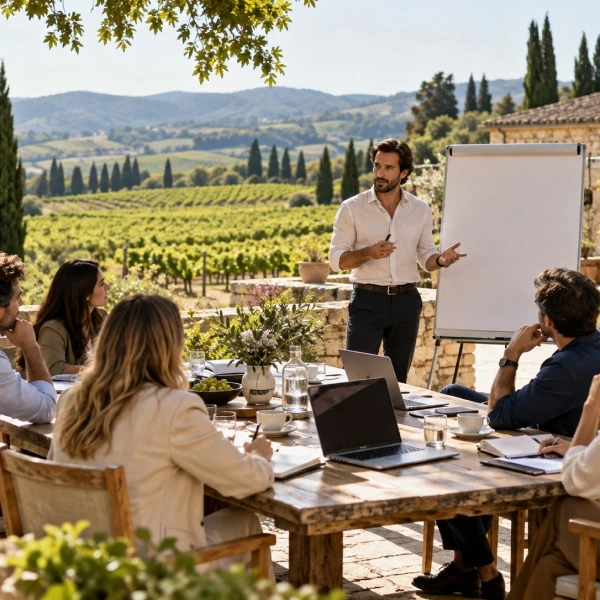
Not all of them pursue the same goal, and not all of them need the same place. Identifying the type helps you choose the length and format.
| Type | What it is for | Where to hold it |
| Check-in | Review progress and pending tasks | Office or video call |
| Problem solving | Analyze a specific issue and decide | Office |
| Annual or strategic planning | Set goals and priorities for the next cycle | Off-site, one or several days |
| New team kickoff | Align roles and ways of working | Off-site |
Check-ins can be done quickly, often in less than half an hour. Planning sessions, on the other hand, need more hours and a different setting to think long term.
Mixing types in the same session is a common mistake. If an annual planning session gets interrupted by this week’s tasks, the team loses the long-term view.
Is it worth taking planning out of the office?
When the agenda includes major decisions, a change of setting helps the team disconnect from daily tasks. Away from email and interruptions, attention stays in the room.
The venue matters so much that a UNAM thesis on participatory strategic planning devotes entire sections to choosing the meeting site and preparing facilitators.
There is also a symbolic benefit. Bringing the team to a special place shows that the topic matters and that the company is investing in listening. People tend to speak more openly when they are away from their desks and daily roles.
What does a facilitator bring?
A facilitator guides the conversation, keeps time and makes sure every voice is heard. This is especially useful when several departments take part or when the topic may create tension.
In the end, a facilitator helps turn the discussion into concrete agreements the team can review later.
Why consider a multi-day meeting?
Deep planning rarely fits into one afternoon. Spreading it over two or three days lets the team work in blocks, rest between sessions and return to decisions with a fresh mind.
Shared meals and free time also spark informal conversations that often unlock items on the agenda.
How do you organize an off-site planning agenda?
The agenda for an off-site gathering should balance work and breaks. These two practices make the difference.
- Schedule the most demanding sessions for the morning, when the team has the most energy.
- End each day with a list of agreements, so the next day starts on something concrete.
Between blocks, a shared meal or a short walk refreshes the group without breaking the work rhythm. If that combination appeals to you, discover how we care for the land in our article on viticulture at San Juanito.
Also leave time at the end to review what worked and what you would change next time. That short review makes every planning session better than the last.
What are planning meetings like at San Juanito?
We have meeting space and can bring in a facilitator if your meeting has a specific goal. We host work meetings and planning sessions that can last several days.
Between sessions, your team can tour the vineyard, learn how the best wines are made and share a meal on our Terrace. We take care of the food and wine, so the organizer can focus on the agenda.
For multi-day gatherings, La Casona lets the group stay on the same property and skip daily commutes. We are located in San José de la Laja, Tequisquiapan, about 50 minutes from Querétaro City and around two and a half hours from Mexico City.
Save the date for your planning meeting and request your quote.


